
Dumbphone
Breaking up with iPhone in the battle for my attention.


I recently returned from Cuba (more on that soon) and my flight was delayed out of Havana. By the time we touched down in Houston, I had already missed my connecting flight home.
It was just after sunset, and I got a text on my dumbphone from the airline. My Verizon Alcatel Pro, a boxy black flip phone that cost a little under $100, informed me that my new flight would be at 7:30 the next morning. Next, I received a discount link for a hotel, but I couldn’t open it on my dumbphone. It was the first snag in my week-long experiment of traveling with this strange little device instead of my iPhone.
I went to the help desk to speak to a United representative, who confirmed that there were no earlier flights to Atlanta. I asked if the airline would get me a hotel, and the woman said, “since you’re coming from Havana, no.”
I wasn’t sure how to interpret that answer. I asked if she could help me reserve a room with my discount code from United. I told her, "I don’t have an iPhone, so I can’t do it myself.”
“I can’t help you,” she said.
“Could you give me the phone number of the hotel, so I can call them?”
“No.”
Another United representative happened to overhear our conversation.
“Move into my line,” he told me. “I’ll look up the number for you.”
I was so grateful for this airport angel. But when I called the hotel, the call center representative politely told me I couldn’t make a reservation over the phone. I thanked her, hung up, and cried in the airport.
This was the exact scenario I feared when I first contemplated the flip phone lifestyle. What if I needed my iPhone? Everywhere I looked were QR codes, confirmation links, and Venmo payments; reminders that “real life” was no longer so distinct from scrolling on a smartphone.
How was I going to pay for parking meters or look for the menu at restaurants? What if I got lost driving in an unfamiliar place? How would I check my work schedule? I hated how seamlessly the iPhone had knitted itself into my routine, that I couldn’t even leave the house without it.
That night at the Houston airport, my fears were realized: I had no choice but to sleep in the terminal. It was uncomfortable, but I survived, curled up on a chair with the company of another stranded person I had met on the trip. As I brushed my teeth in the family bathroom at 5:30 AM, I started to feel something different, triumphant: I can do this. I can free myself from the smartphone.
Breaking up with iPhone means accepting some inconvenience. I walk to stores and restaurants only to find out they’re closed. I get lost trying to drive places and have to call someone and ask for directions. I scrounge for quarters to pay the meter. I ask questions to strangers instead of Googling.
Even as I was writing this article, I got a frustrated email from an organization trying to give me a prestigious award. They had been calling, and couldn’t leave me a voicemail because my inbox was full. I wasn’t aware that it had filled up because I’m not using an iPhone. I called back with the apology I now offer multiple times a day: sorry, thank you for your patience, I’m on a flip phone.
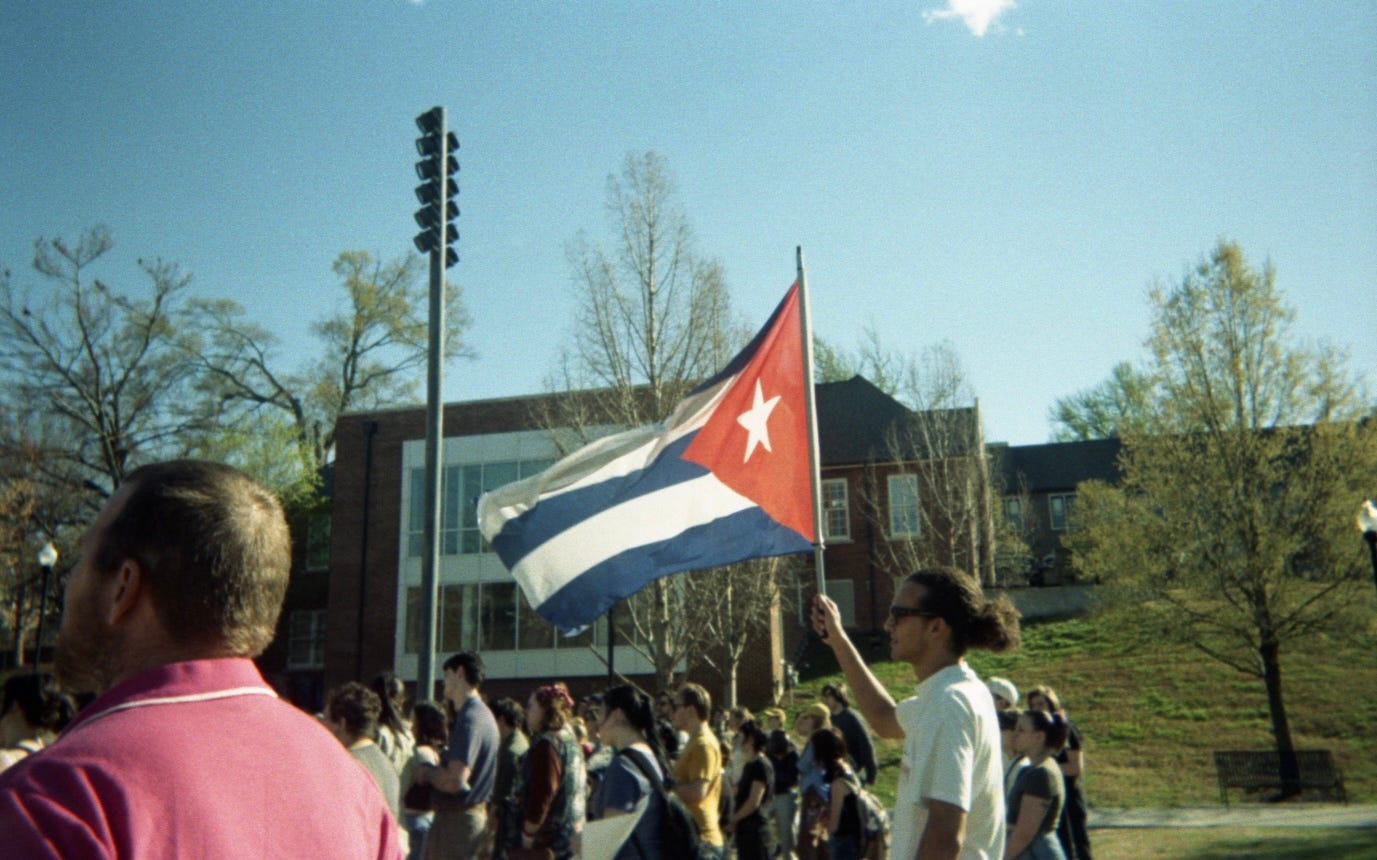
Cuba lags in smartphone dependence, so it wasn’t difficult to get around Havana without one. I could easily hail a yellow taxi, and if I stopped to ask directions, people were friendly and eager to help. I noticed people were generally more social, chatting idly in the city streets, or gathering in the villages at a smoking grill while dogs and hens milled around their feet. It felt like I had traveled back in time, 10 or 20 years, or maybe time wasn’t the issue at all—maybe this was just life without capitalist alienation.
I’ve been back home for a few days now, and I read the story of the day about college students writing all of their essays using ChatGPT. I just came from a country with a 100% literacy rate, where everyone around me was reading some exciting piece of revolutionary theory. Now I began to wonder if young people in the US would learn to read and write at all.
I look back on my early life before smartphones as a stronghold of attention and imagination. I loved the library and had a huge appetite for reading. I was a prolific artist and writer. I owe so much of the adult I’ve become to those years of curiosity and exploration, the result of long days of idle time and boredom.
Sometimes, looking back, I will romanticize that boredom as something pleasant or relaxing; but now that my flip phone has brought more idle time back to my life, I remember that being bored is painful and frustrating. The boredom will seemingly torture me into being creative, in the same way that hunger will push me to eat nourishing food rather than something colorful and sweet. Boredom is bland rice and beans: it feeds my imagination.
What does it mean for a generation of children to grow up without boredom? How do they discover their creativity without those sacred, protected years away from screens?
While this is a concern of mine, I also think that adults tend to project our fears about our own lives onto the kids. If we’re concerned about how children will relate to the highly addictive technology that preys on our communities, we should treat our own dependence on it first.
Every morning, I open social media to a flood of slop posts written by generative AI. My email inbox is full of horror stories about this tech and its destructive impact on people’s lives. I look outside to see neighbors walking their dogs on a beautiful spring night, necks crooked, looking down at their phones the whole time. I open my iPhone for the first time in a week and, just like that, I lose several hours to scrolling. We’re all addicted to tech, and the industry is thriving. It feeds on our attention and creativity, leaving us demoralized and lonely.
I’ve tried all the screen time management apps, using a black and white setting to dull my social media feeds, deleting or blocking all the websites that lock me into the doom scroll. None of it has worked, because the technology I’m battling is more addictive than drugs. I’m beginning to think that going dumbphone is the only sane response, and maybe even a radical one.
Maybe, if enough people opt out of the smartphone world, we can make some collective demand to keep our public space, our real physical realm, a place we can freely exist without tech intervention. I know I’m not the only one fantasizing about throwing my smartphone in a river, or hitting it with a big hammer.
I think that our attention is sacred. In waning moments of leisure, between shifts in the capitalist grind, we deserve autonomy over where we place our focus. We deserve to read, think, socialize, and create. Maybe most importantly, we deserve to do nothing at all. Boredom is sacred.
In the next few days I’m planning to download all my photos from my iPhone and then get rid of it for good. My friends who have already made the jump tell me they have no regrets. They feel happier and more present.
They say the mornings are the best part: waking up with no social media, no emails, no news. Just you and the sun and some idle thoughts. It sounds kind of boring. I can’t wait.
1. You are brave
2. This worries me
3. Maybe you need an emergencies only line
I was thinking recently about how different travel felt before I had a smartphone -- how I felt like I was really going somewhere, risking loneliness and getting lost and feeling completely immersed, for better or worse. It's different now, when I'm in constant contact with everyone, to feel as though I'm really going away.