
Mustard Seed
One last Chattanooga tapestry, full of mine wars and fires.

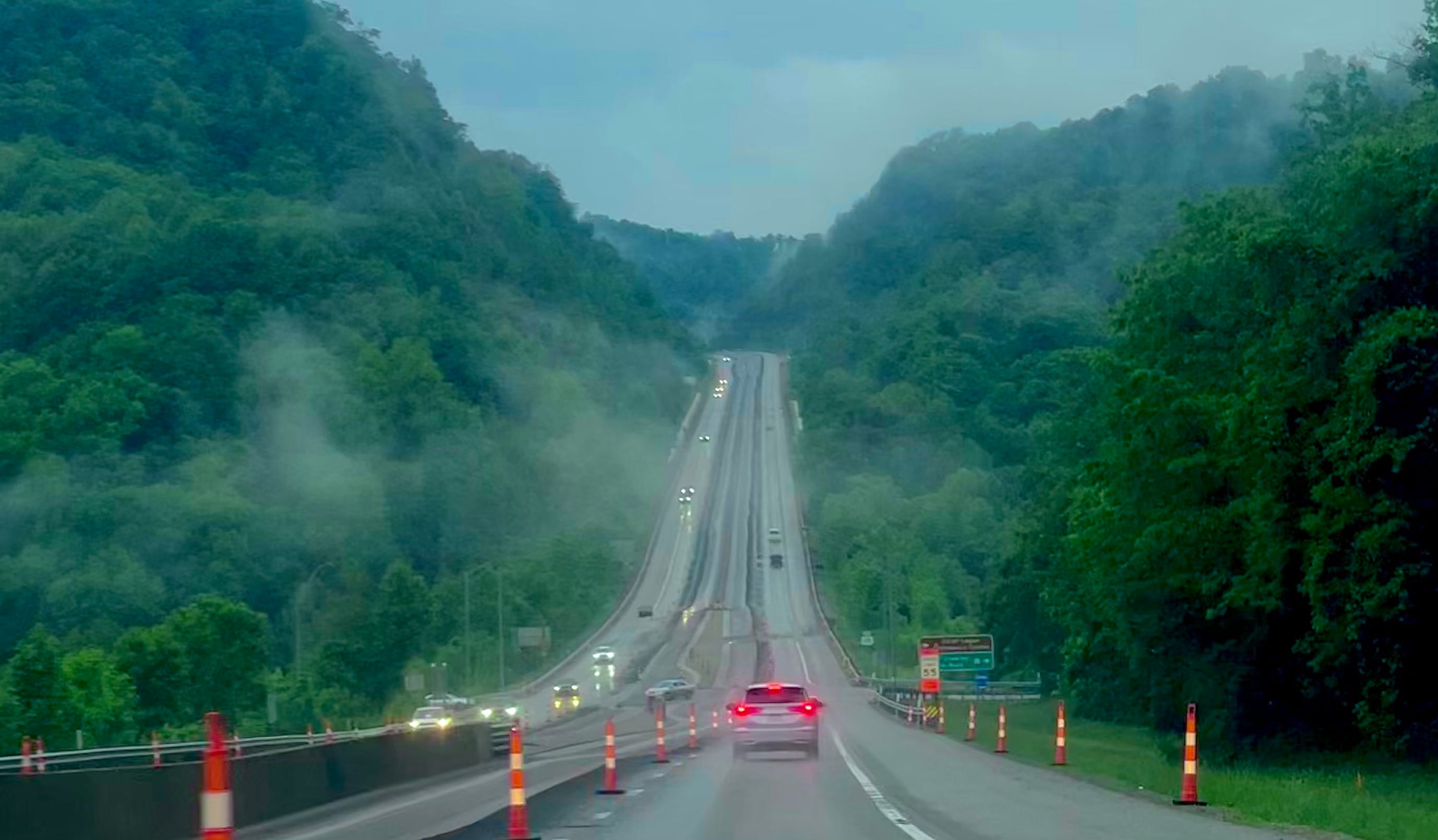
A lot of people feel romantic about the ocean, and this is something I never understood. I get those poetic feelings when I see clouds settling below the tops of the Appalachian ridges. Last week, as I drove into Matewan, West Virginia, the sight of it made my heart want to burst. I rolled my window down to get a photo, and evening frog songs poured into the car with the cool mountain air.
I could tell the room I rented underneath the Mine Wars Museum was haunted as soon as I opened the door. But I figured the lingering ghosts of the miners would have mercy on me, a comrade. After all, I had come to Matewan to pay my respects to these fighting ancestors; having spent the last several weeks reading and meditating on the Coal Creek Wars that happened in Tennessee.
Most of what I know about Coal Creek comes from Dixie be Damned, a book I brought to Lexington to display in my latest exhibition. Keelan O’Sullivan, the director at Institute 193, laughed and asked if I knew the authors. Neal Shirley and Saralee Stafford were his longtime neighbors and friends. I took this synchronicity in stride, as I’ve learned to do with all Southern labor history, because its seemingly varied streams eventually trace back to one fountainhead. In my opinion, that’s in the mountains of East Tennessee.
In 1932, Myles Horton founded the original Highlander Folk School on Monteagle, less than an hour’s drive from Chattanooga. In The Long Haul, Horton recalls the early days of this radical labor organizing school with his friend, Jim Dombrowski, who visited the old Coal Creek battle sites to archive folk songs the people there had written during the uprising. It’s thanks to him I was able to listen to Coal Creek Troubles while I worked on my last tapestry about Chattanooga labor history, which I call Mustard Seed.
God Bless the Knights of Labor
With all their wit and skill;
Their efforts to accomplish,
Intentions to fulfill.
I am in sympathy with the miner
As everyone should be,
Other states they work free labor,
And why not Tennessee?
(Betty Litton Davis’ alternative verse in ‘Coal Creek Troubles,’ originally written by Jilson Setters.)
At that point it had been well over 2 years since I started the Gospel of the Working Class series, and I had become anxious to wrap up the project. It felt like the world had changed so much in the interim, and I had changed too. I was tired and angry, so distant from 2024; a spring infused with so much hope by the union victory at Volkswagen. I had gone to Cuba twice since then to witness a living revolution fighting the US blockade, and admittedly I had a hard time shifting my eye back to Tennessee, where it felt like our labor movement had been set back decades from anything resembling that kind of power and conviction.
I knew how powerful Tennessee workers had been at the turn of the 20th century, from all accounts of the Coal Creek War and the years leading up to it. In the aftermath of the Civil War, Southern states remade the Slave Codes into the Black Codes, setting up free Black men to become criminals. Tennessee’s incarcerated population exploded beyond what the prisons could hold, so the state approved leasing out convicts to industrial employers for cheap labor. The Tennessee Coal, Iron and Railroad Company started bringing up cattle cars packed with prisoners bound for the mines.
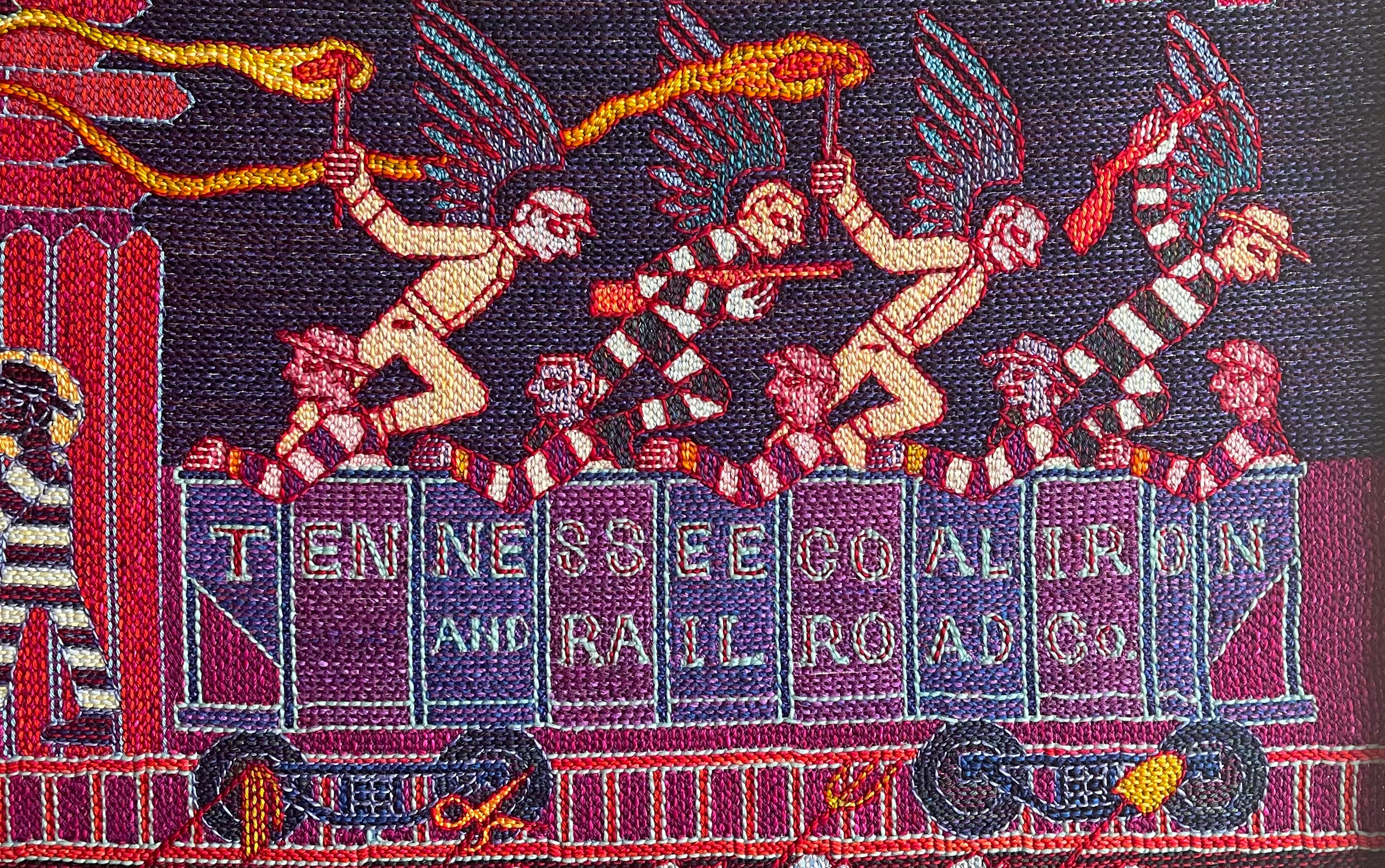
Many convict miners refused to go underground without a fight. Karin Shapiro wrote in A New South Rebellion: “Convicts engaged in escapes, sabotaged the mine, and shirked work. Roughly one in twelve prisoners successfully fled incarceration in one of the mining stockades. Sabotage took many innovative forms. Overcharging the holes with powder or engaging in “some pyrotechnic display directed towards the roof” seemed to be favorite methods of damaging a mine. Inevitably officials would have to close the shaft while guards, miners, and some convicts cleared away the rubble.”
Before the convicts arrived in the mines, their wage-earning predecessors—union men with the United Mine Workers of America (UMWA)—were already laboring in dismal conditions. Well into the 20th century and all up and down Appalachia, miners would stage rebellions of their own against the mining companies; fighting to earn US currency instead of company scrip and for the right to weigh their own coal at the end of the work day. But if you asked the coal companies, the miners weren’t fighting for fairness. They were either too simple-minded to name their own oppression, or they were bloodthirsty thugs that had to be quelled by force; depending which narrative was more useful that day.
A few months ago, near Omaha of all places, I wandered into a Fall festival attraction called the Lost Pumpkin Mine. There, I found the plight of the Appalachian worker set in motion with all the animatronic glory of the back room at a Chuck-E-Cheese. I passed through tunnels lined with life-size, cartoonish effigies, each more pathetic and decrepit than the last, and between the harsh clank of metal on rock I heard whimpers from the workers getting mauled, crushed, and hung upside down.
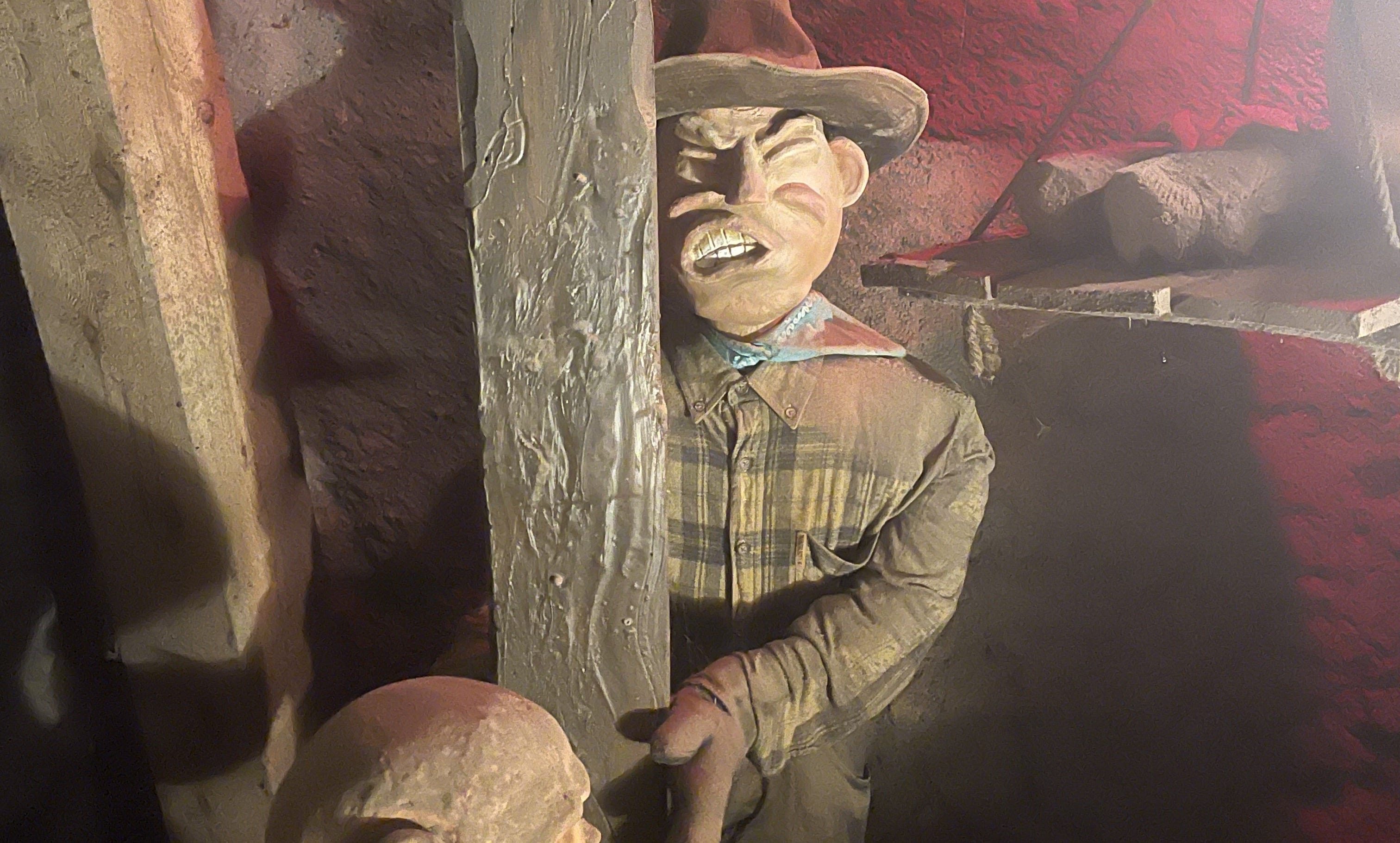
In Omaha I found the persistent stereotype of the Appalachian miner, which traces a century back to propaganda from the company’s side of the Matewan Massacre and the battle at Blair Mountain. Newspapers like The West Virginia Federalist and The United Mine Workers Journal were banned by the government for writing about the class conflict at the heart of the mine wars, and miners could be arrested for reading them. Speaking about the dangerous conditions inside the mine could violate the yellow dog contracts the workers were forced to sign.
A good part of why the Mine Wars Museum exists today is John Sayles’ 1986 film, Matewan, which sympathetically follows the workers’ side of the 1920 battle. The film renewed public interest in the story, similar to how Barbara Kopple’s Harlan County, USA had opened up the struggle of some Kentucky miners in 1976 for the whole world to see.
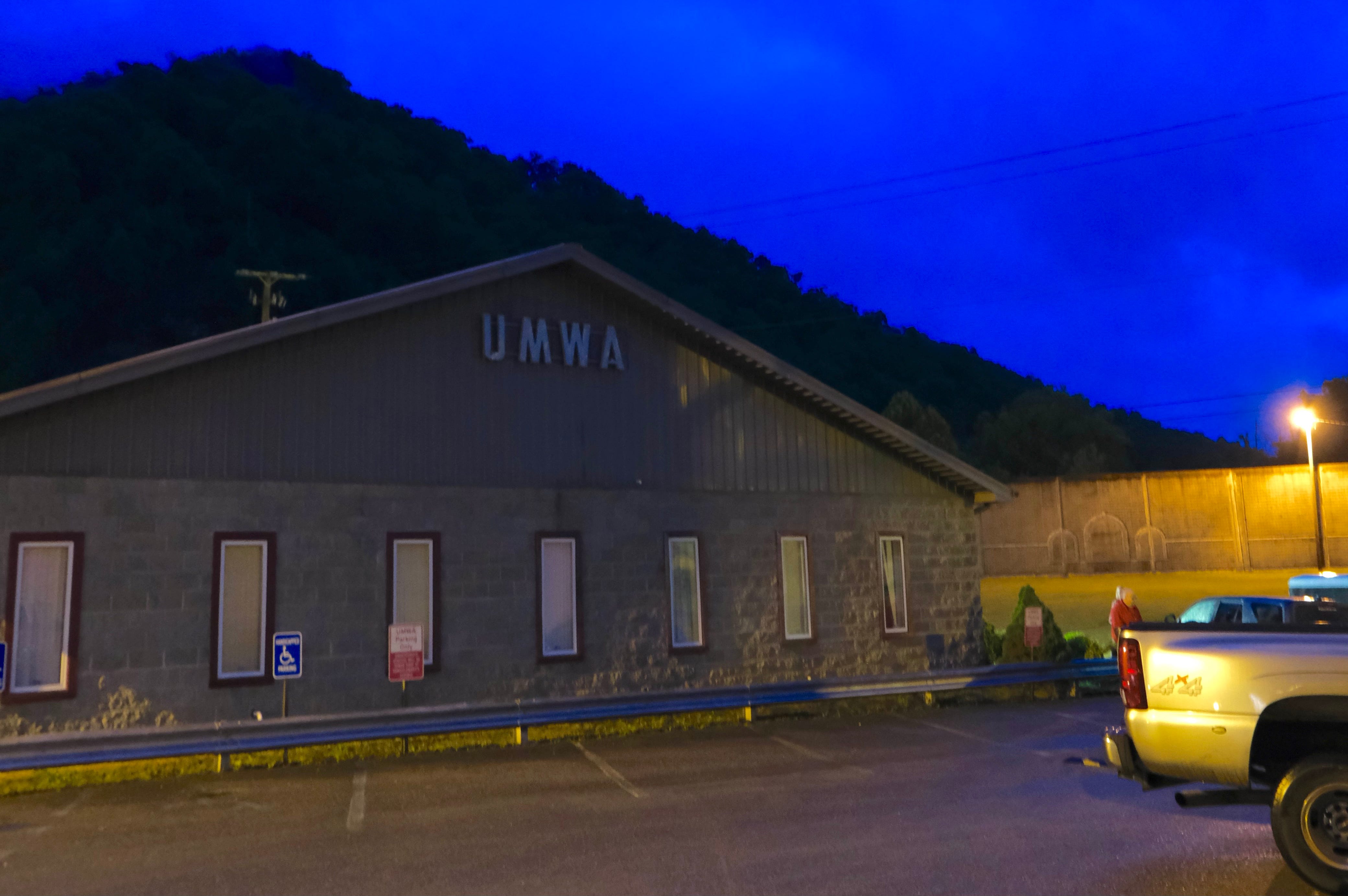
When I walked into the Mine Wars Museum, it was like entering a big labor-artist family reunion: Stacy Kranitz’s photographs of the Appalachian working class lined the walls, and the shelves were stocked with Kim Kelly’s Fight Like Hell and merch designed by union illustrator Sam Wallman. I was heartened to find this small town full of folks fighting to keep West Virginia labor history alive. I showed the museum workers a bad picture of the Mustard Seed tapestry on my phone, and I hoped I had done something similar for the ancestors at Coal Creek.
The Tennessee war is a different story from anything that happened in West Virginia, and that’s because of convict leasing. In Kentucky and Tennessee, wage-earning miners were already laboring in conditions so dangerous that the Coal Creek workers had gone on strike in 1887 and 1889, and in 1891, the company locked workers out of the mines and brought in unwilling scabs from the prisons.
The miners were devastated. The coal towns of Briceville and Oliver Springs were their homes, and suddenly their families’ houses were being turned into prison stockades. A majority of white miners in East Tennessee had fought with the Union side in the war, but that didn’t mean they were happy to see Black men go into the mines as scabs. Still, the secretary-treasurer of the UMWA local that represented those coal towns was William Riley, a Black unionist. Riley was part of an East Tennessee organizing culture that integrated its locals, unlike the rest of the South, so Black and white miners were already underground together, and now both were seeing the convicts come in to replace them.
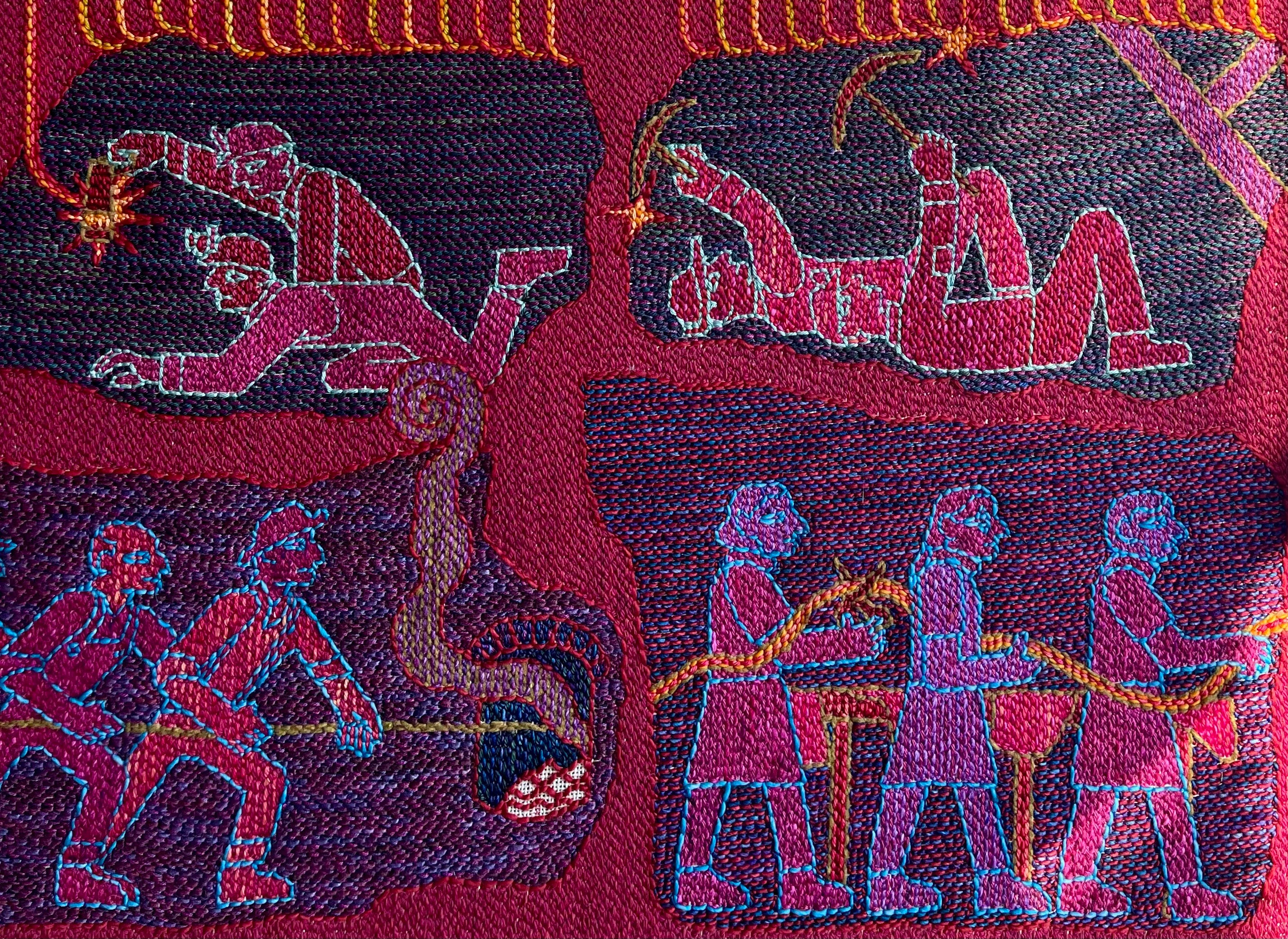
One explanation for this unusual racial integration was the influence of the Knights of Labor. An early model of “one big union,” the Knights went beyond traditionally union skilled trades and organized Black workers and women, including textile worker Leonora Barry, who would come to Chattanooga to lecture against child labor in 1889. As Connie L. Lester wrote for the Tennessee Encyclopedia: “The Chattanooga Knights demonstrated their strength in 1886 when they elected John J. Irvine, an African American machinist, to the position of circuit court clerk. The stunned white political community readily attributed the victory to the labor union.”
The first skirmishes at Coal Creek were a cry for help from Governor Buchanan, who the miners thought was sympathetic due to his ties with other unions. In the summer of 1891, miners took up arms and stormed the town of Briceville, burning down the stockade and putting prisoners on trains to Knoxville and Nashville, where they were incarcerated again. But the convicts kept coming back, until Halloween night, when the miners escalated.
Dixie Be Damned says, “The Tennesseans and south Kentuckians laid siege to the stockade in Briceville, freed the convicts, and burned the buildings to the ground. This time they helped the convicts go free, providing clothes, food, and transportation to the prisoners. Some of these inmates set out for the Kentucky border, while others joined the miners in their march on Coal Creek, where they liberated more prisoners, burned company property, and looted a store owned by a mine superintendent. They freed about three hundred prisoners. As the Knoxville Tribune wrote, the ‘miners have acted for themselves and have solved the convict problem with a vengeance.’ All that remained after the quick uprising was a burned stockade and convict clothes ‘scattered for miles along the Coal Creek Valley.’”
The Briceville siege was largely celebrated by the community, who contributed their own clever forms of resistance. Dixie Be Damned says, “a large public dance was also organized the night of the rebellion to provide an alibi for those most likely to be targeted as ringleaders. One miner cleverly remarked, ‘Nero fiddled while Rome burned, but Coal Creek danced while Briceville burned.’”
Exactly one year later, the Briceville townspeople would hold another dance to commemorate the anniversary of that night, and as Dixie notes, “the dance floor and stage for the event were intentionally built out of lumber torn from the old stockade.”
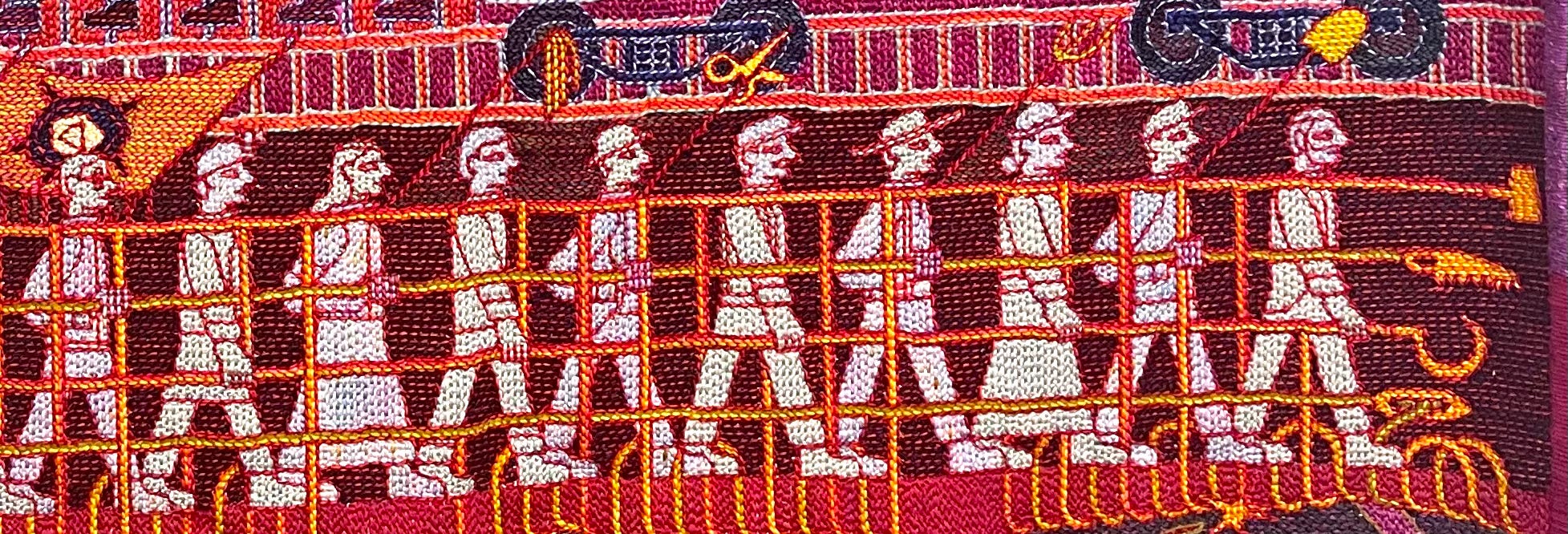
The Coal Creek war evolved into an occupation, and a series of battles waxed and waned over the next several years, attracting a growing army of support on either side. Members of the Knights of Labor traveled from Chattanooga to fight alongside the miners, including D.B. Monroe, who was one of very few insurrectionists actually sentenced to prison after the media labeled him an "outsider.” Governor Buchanan raised a militia from Chattanooga, Knoxville, and Nashville to back up the company guards. Ultimately, in 1895, Tennessee would concede to the major demand of the war: ending convict leasing.
In Mustard Seed, as with all of the Gospel of the Working Class tapestries, I use fire to represent the power of the union. It’s convenient for Coal Creek, seeing how workers burned down equipment and stockades in both material and symbolic protest. I see this as a cleansing fire, made of righteous anger. But it also represents courage and discipline, and ultimately the sacrifice of individuality by many different workers in the name of solidarity. Nothing less could cultivate such a blaze out of a tiny spark.
Dixie Be Damned ends its story of the Coal Creek movement with an analysis of “the seeds of its own decay.” The East Tennessee insurrectionists fought for a short-term goal to end convict leasing, but they failed to link their struggle to any sort of revolutionary vision for how they might transform society. Though the workers’ solidarity across racial lines was moving and impressive, most were still committed to the American principle of individual land ownership, which put them at odds with the kind of land reform that might redistribute the capitalists’ hold on Tennessee and its natural resources.
Dixie partially concludes that despite its striking militancy, the movement was reformist and not revolutionary. But it’s also something we’ll never exactly be able to explain. “We cannot believe that thousands of Black and white convicts, miners, and small shopkeepers armed themselves, attacked soldiers and property, liberated prisoners, and disobeyed strict racial codes of conduct merely for the sake of a simple policy change.”
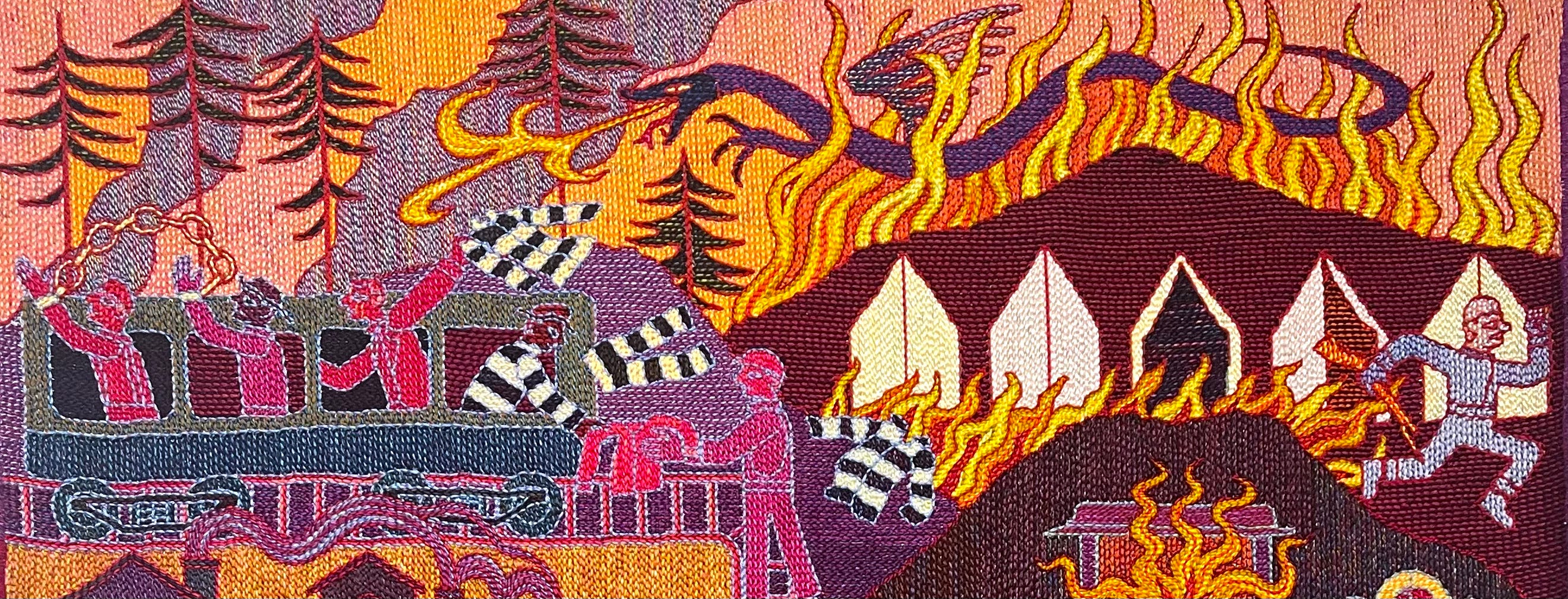
I see a spark of revolution in the Coal Creek fighters. I am obsessed with the mystery of what those sparks can grow into: the internal transfiguration that only happens when someone physically engages in class struggle together with other people. It’s hard to name, but once you know it, you can recognize its light shining out of a person when they speak. My dream, or maybe delirious vision, is to see that fire grow so big in everyone that we’re all consumed by righteous anger—then, as Pete Seeger sang, we can bring to birth a new world from the ashes of the old.
But after spending 2 years with this militant Tennessee history, it’s hard not to conclude that all that fire we used to have has burned out by now. These ancestors left me alone with my atomized life in a time of monsters, and I feel like my fire is doing nothing except burning me up from the inside.
When I get desperate, at least I have Myles Horton to relay my experience back to me, as if he’s been walking the same path all along.
“I had to turn my anger into a slow burning fire, instead of a consuming fire. You don’t want the fire to go out—you never let it go out—and if it ever gets weak, you stoke it, but you don’t want it to burn you up. It keeps you going, but you subdue it, because you don’t want to be destroyed by it.
… Get yourself together, get ready for the long haul and try to determine how you can live out this thing and make your life useful.”
Labor Intensive Recommendations
Trouble! at Coal Creek — Austin Sauerbrei, artist and longtime labor organizer in the Chattanooga scene, wrote and illustrated this amazing story about the Coal Creek war.
Blackalachia — While I worked on this piece, I listened several times through Moses Sumney’s incredible album, recorded somewhere in the woods of North Carolina.
We Make The Road By Walking — A conversation between Myles Horton and Paulo Freire, who organized rural Tennessee workers and Brazilian peasants, respectively, and had a beautiful way of understanding the work and each other. They also kind of looked like twins.
My maternal grandfather (Nathan Damewood) was from West Virginia. He married and settled in SW Virginia. I inherited a quilt and matching sham from grandma which was hand stitched with a color I think was known as “Turkey red”. Many antique quilts from Appalachia feature Turkey red. I’m glad Tabitha can associate in some way with that color and also that outstanding labor history. Her art work resonates with me spiritually!
I think you might've linked the wrong We Make the Road by Walking -- unless I'm totally misreading the description in your post or on the website!