
Sleeping Dragon
Dispatch from rural Wyoming.

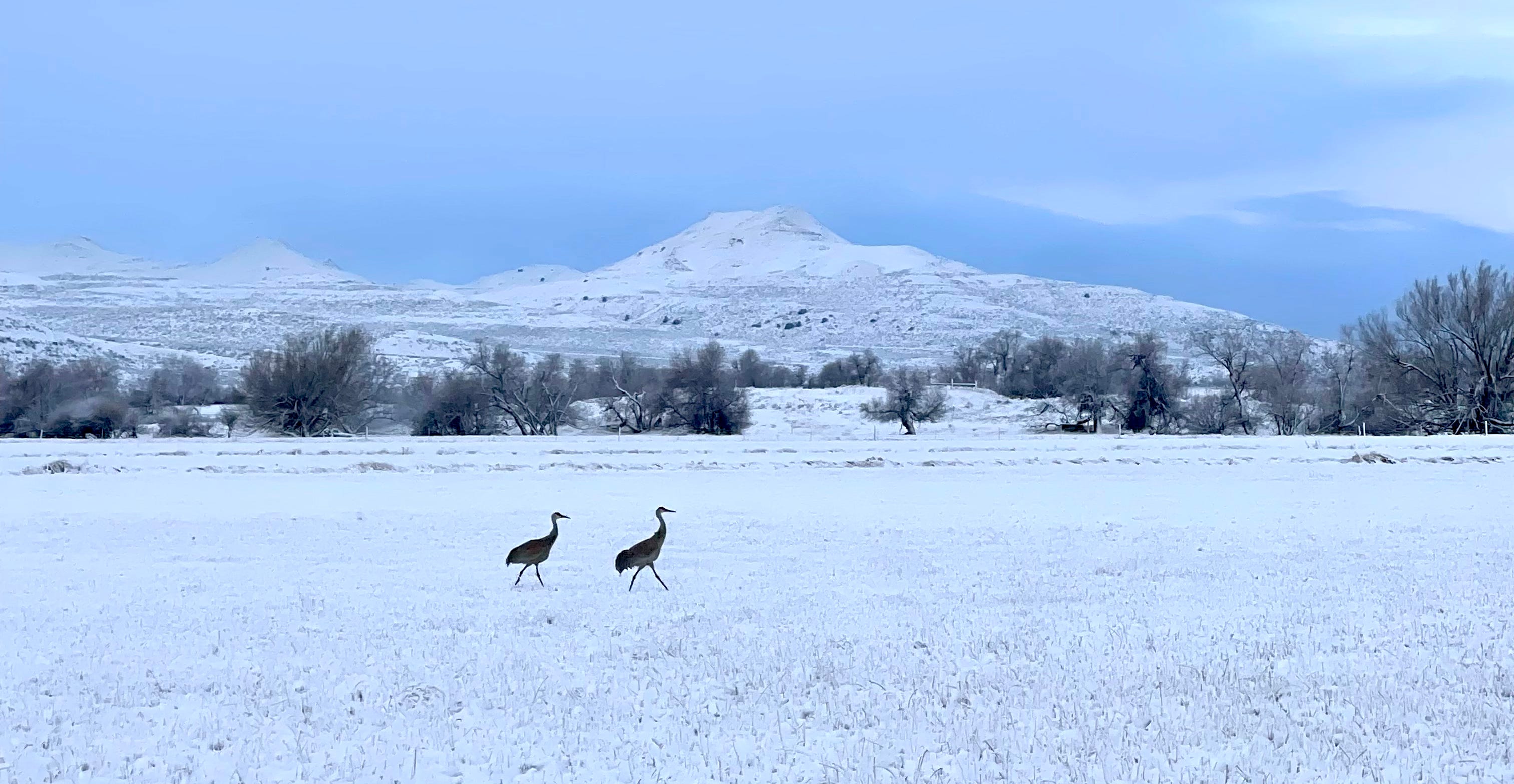
I’m spending the month of April at UCross Foundation: a remote artist residency on a piece of Wyoming land the size of Manhattan, where the population is currently 26.
I’ve never been “out west” before now. Every day, I walk back and forth from my sleeping quarters to the studio under the biggest sky I’ve ever seen. Even the Bighorn Mountains, massive and snow-capped in the distance, seem dwarfed by this open sky.
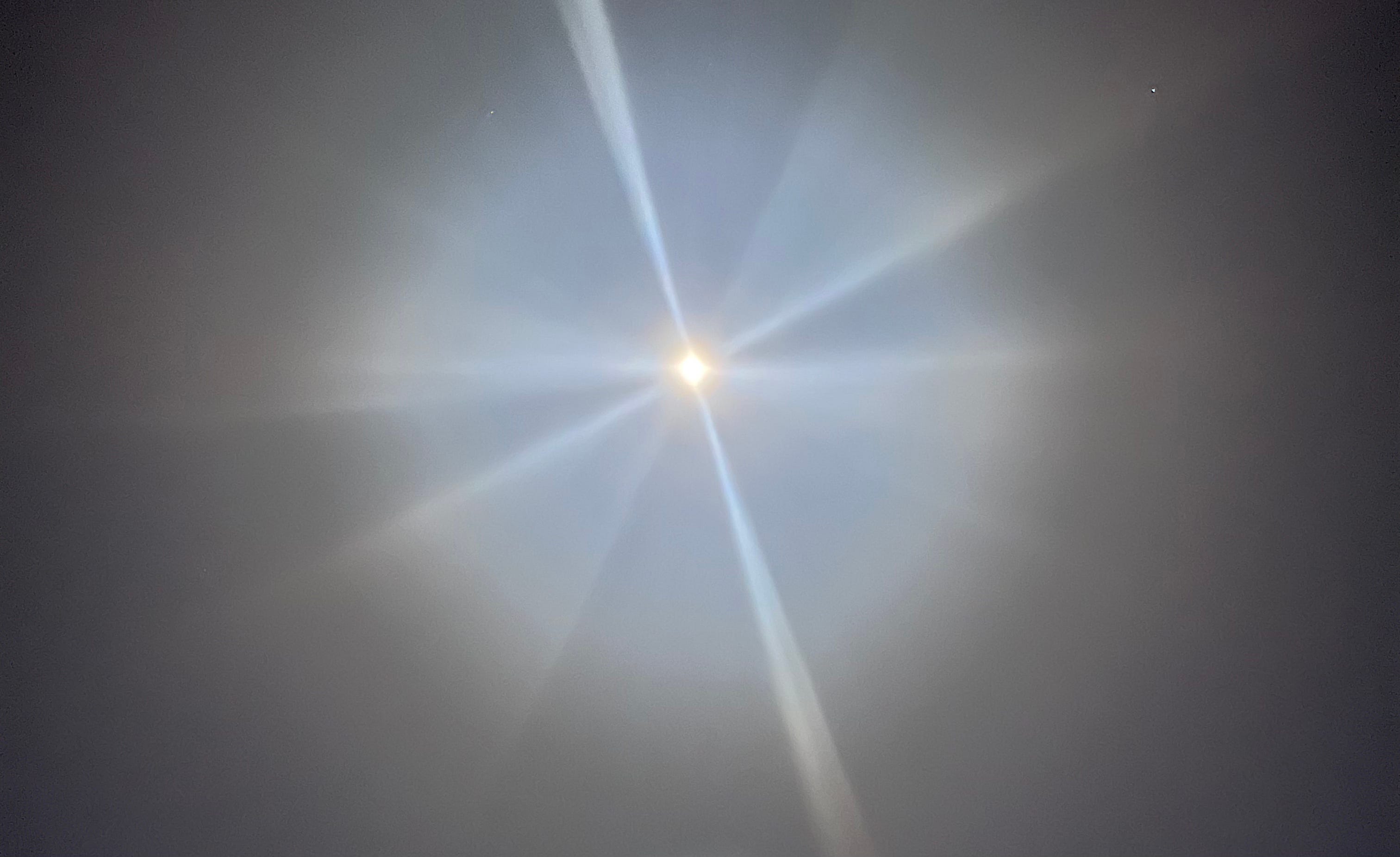
At night, not even a street lamp punctures the darkness, and I see a blanket of unfamiliar stars that never come out for me at home. As the full Pink Moon grows closer, it’s becoming bright enough to walk the night path without a flashlight, and I see my moonlit shadow on the ground.
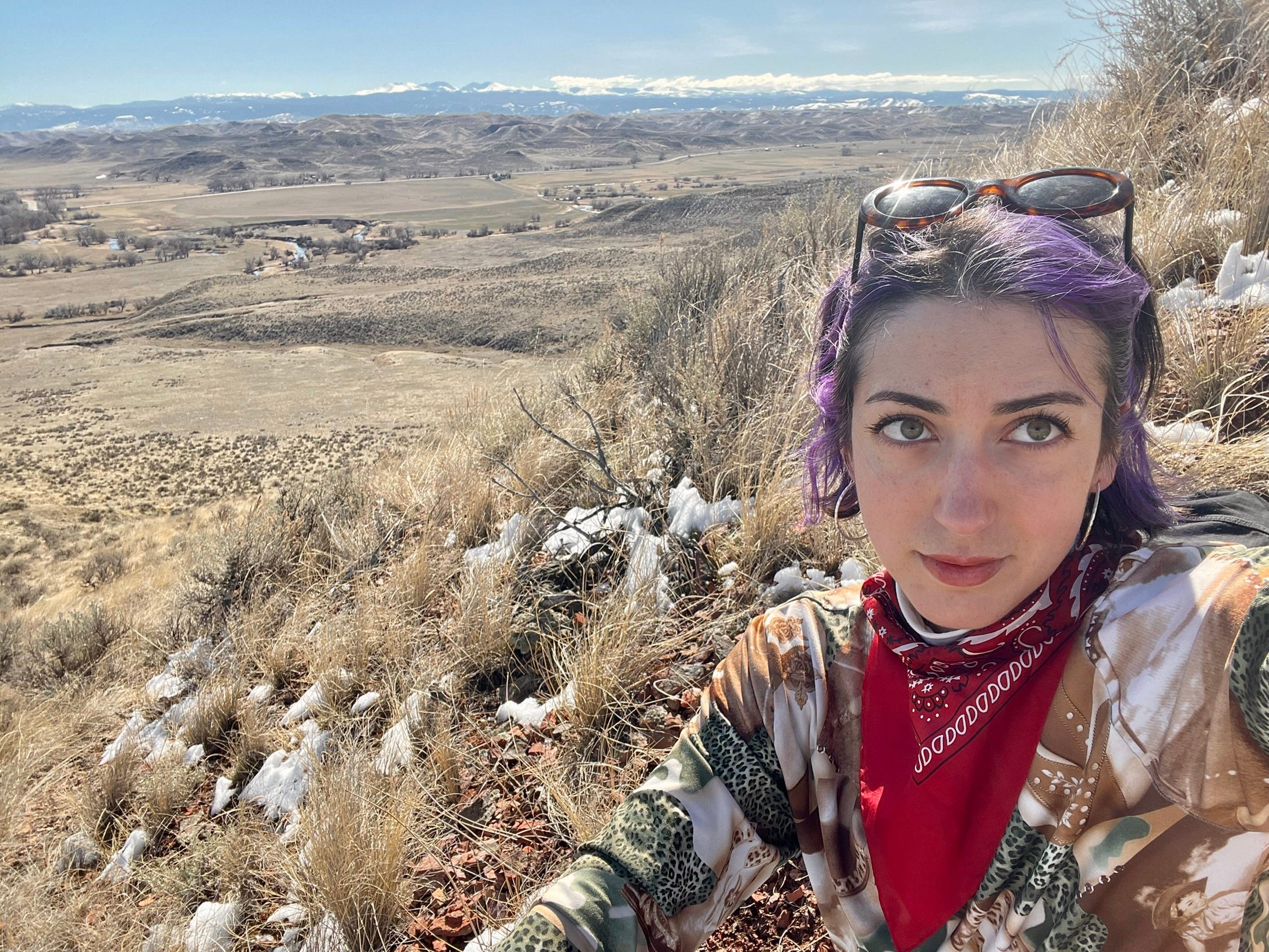
Last week, I took an impromptu solo adventure to climb “sunset hill.” The residency has a few designated hiking trails just down the road, but walking barefoot through freezing creek water and hopping the barbed-wire cattle fence made me feel like a homeschooled kid again; taking full advantage of unsupervised hours in the woods.
In my favorite interview of hers, Mary Oliver says of her childhood: “I got saved by the beauty of the world.” I think I felt the same about my time wandering around in the woods. I wasn’t helicopter-parented, or figuring out my dynamic with my siblings, or fitting in with other children my age. It was the place where I was just myself.
I don’t know if it’s an overdose of true crime stories, or a rational instinct for self-preservation, but I’ve been too anxious to hike by myself at home in Tennessee. On the rare occasions I’ve tried, my mind is still busy looking over my shoulder, rubbing my phone in my pocket like a totem, holding my breath when I hear crunching leaves down the path.
On my sunset hill hike, I thought about nothing except following the deer paths that wandered through tall yellow grass, then up the steep face of the hill, until I was completely winded from the climb. I realized then that the view was amazing, and I sat there with nothing in my mind except looking and listening.
Yesterday, I finished a small tapestry about Appalachian forest defenders. I’ve met more than a few southern activists who became politically radicalized through their love of the land.
One person told a story of being deeply involved in a movement against mountaintop removal mining: an ecologically devastating form of extraction that’s still popular in the south. He remembers learning about the American student, Rachel Corrie, who was crushed to death by an Israeli-driven bulldozer in the West Bank in 2003. Cynthia Corrie, her mother, would later sue Caterpillar for supplying the machinery that the IDF used to kill Rachel. Caterpillar sold similar tools to the fossil fuel industry in Tennessee, and my activist friend realized his struggle against these companies was an international one, from home to Palestine.
I find forest defenders so inspiring as contemporary martyrs. Today, the best way to stop or slow down the destruction of the land is to put your body in the way of the project. One of the most effective methods is the sleeping dragon: wrapping your arms around a piece of equipment, or a tree, and then handcuffing them inside a segment of PVC. This way, police can’t just use bolt cutters to remove you, and the demonstration can stop progress for several days.
It’s a beautiful act of nonviolent protest, and it takes a community of supporters to keep the protestor fed and hydrated until the cuffs finally come off. In this era of increased oppression and violence against protestors in the US, I think everyone has a duty to care for the martyrs. We keep up the fight until Mahmoud Khalil, Rumeysa Ozturk, and other illegally detained citizens come home, and until Palestine is free.
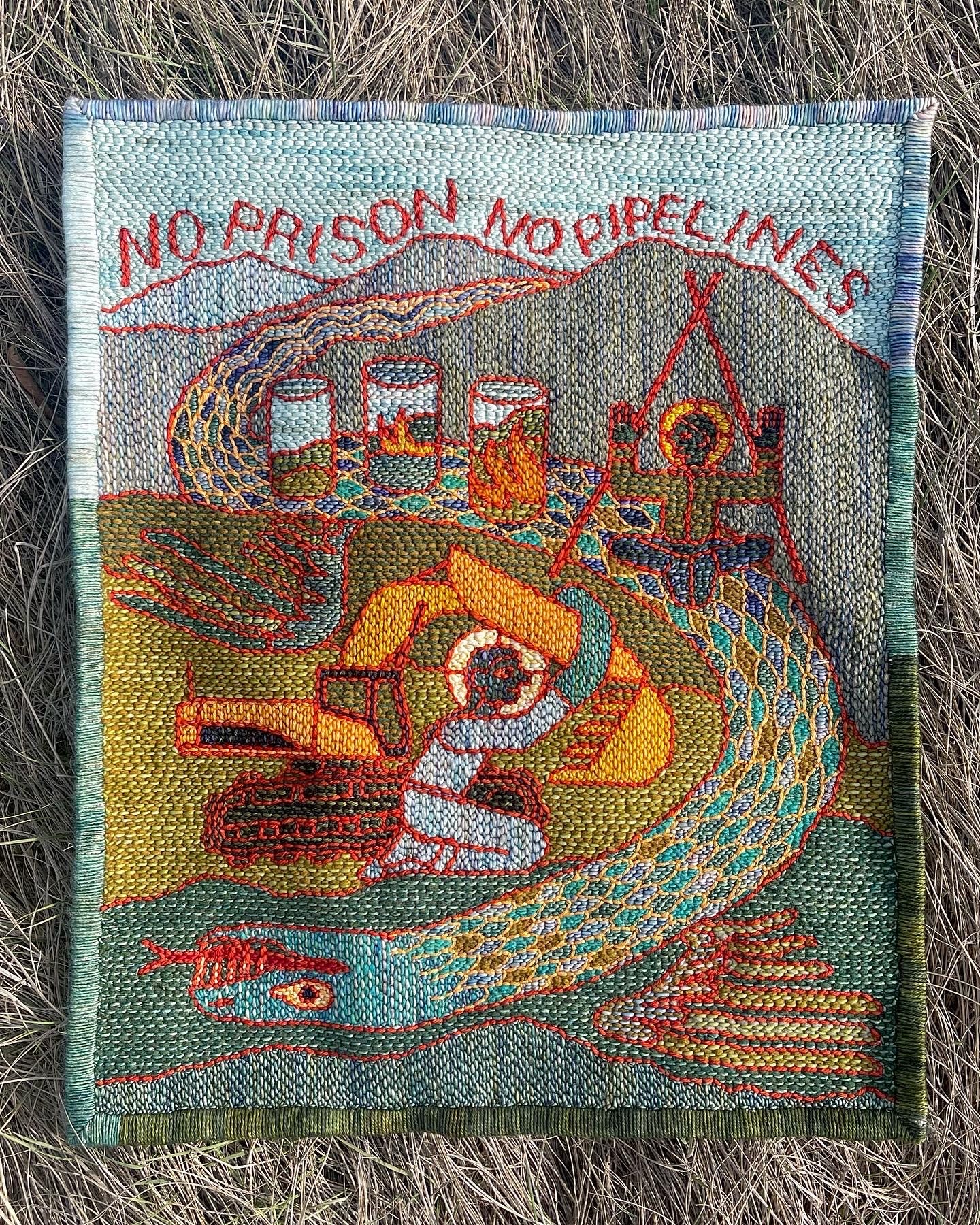
My artwork tends to be laser-focused on labor organizing; I know in theory the protection of our natural world is very important to me, but it doesn’t often come through in my pieces. I knew I was going to make the Sleeping Dragon piece several weeks before I came to UCross, but it ended up being a funny synchronicity that I worked on it at the same time as I enjoyed a reconnection to the land, like running into an old friend.
On my way back from sunset hill, I had to cross a few rusty barbed-wire fences, and I showed up at dinner with punctures on my hands. After showing my stigmata to the other artists, I ended up getting a ride to the nearby town of Buffalo to get a tetanus booster. I guess there are other dangers in the wild aside from lurking violent men, but now I have another 10 years to explore Wyoming without fear of infection.
I don’t know what kind of world I’ll come back to in a few weeks, but I won’t forget about the big sky and the wild land, and the possibility that we—and it—can still be saved.
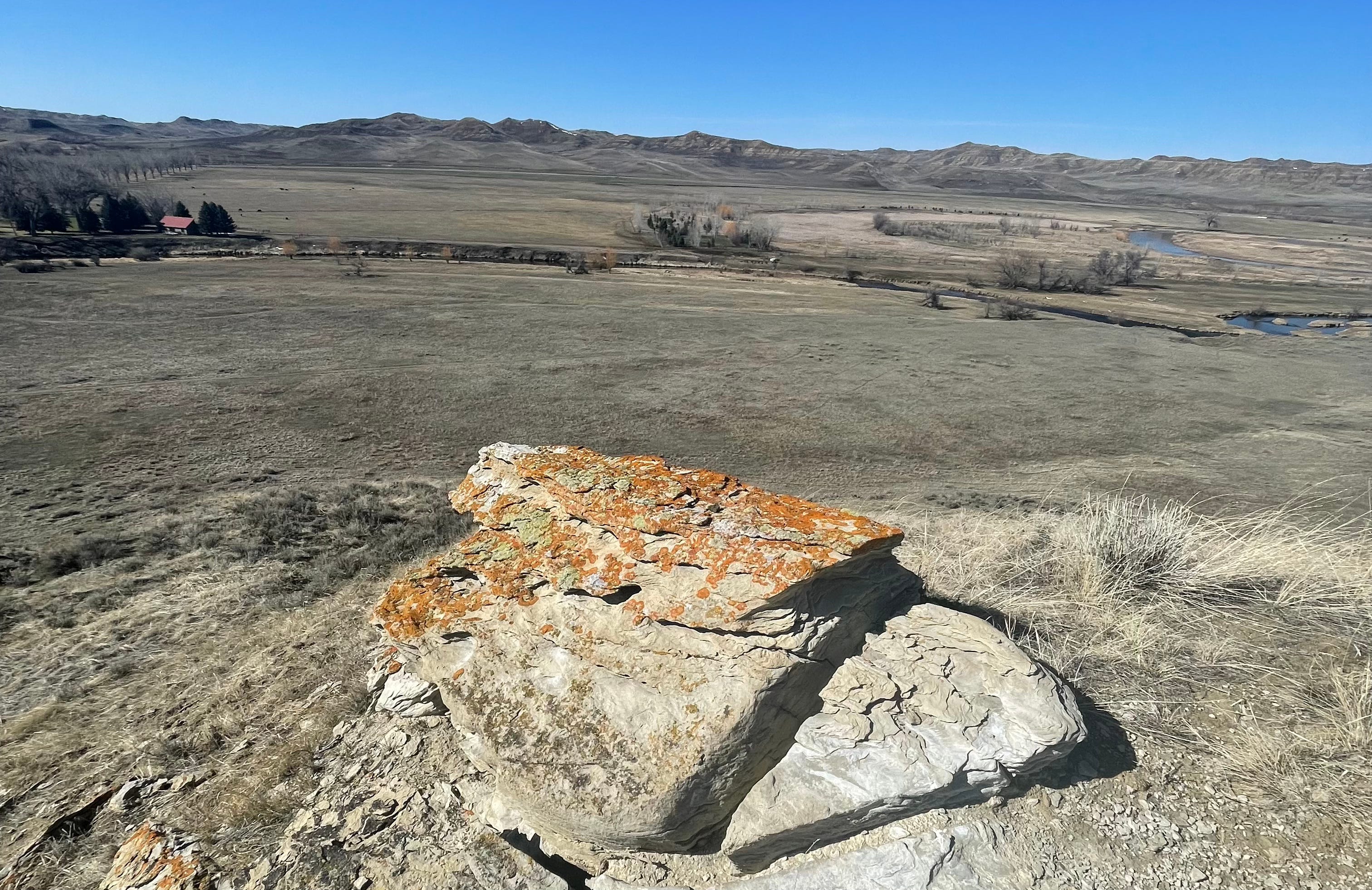
Yes, the West is magnifient. Wonders to be explored and discovered over and over again.